


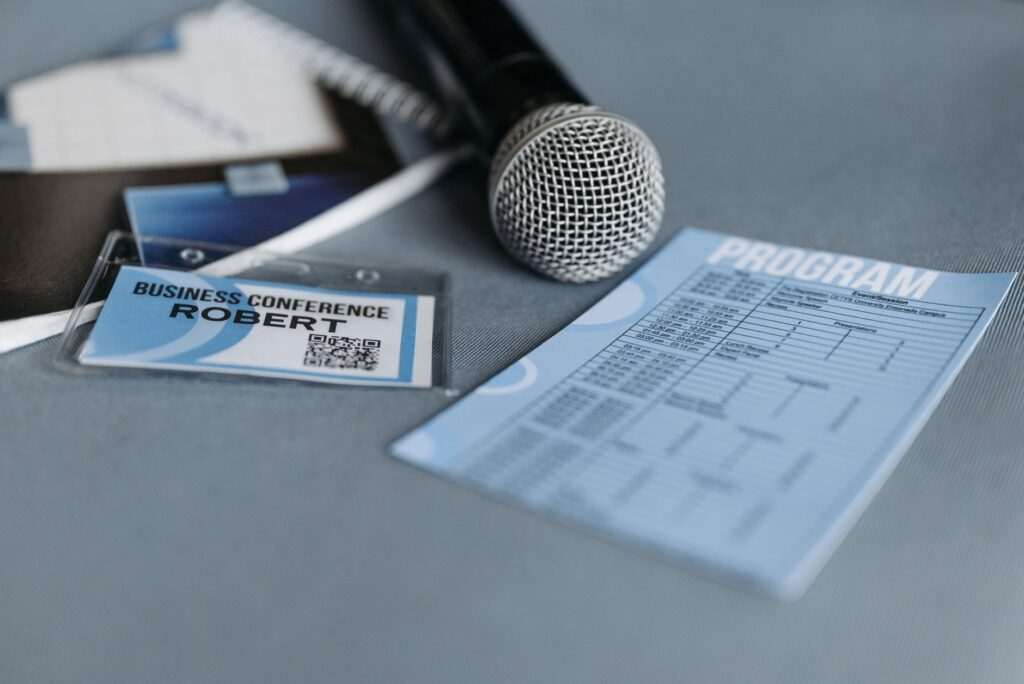
For decades, the professional tech conference was defined by a simple exchange: a business card for a piece of corporate swag. Today, however, the trade show floor has evolved into a highly sophisticated, physical-digital data environment. As developers and engineers gather at major industry events, their movements, preferences, and interactions are tracked with a level of precision that rivals online web browsing.
A clear window into this shifting landscape is provided by the newly updated privacy policy from C4Media, Inc., the global publisher behind InfoQ.com and the producer of the prominent QCon, InfoQ Dev Summit, and InfoQ Live events. Updated in February 2026, the company’s revised guidelines highlight a growing tension in the B2B tech event industry: how to deliver valuable lead generation to corporate sponsors without alienating an increasingly privacy-conscious, developer-heavy audience.
The Physical Shield: Designing Out Passive Scanning
One of the most notable details in C4Media’s updated policy concerns the physical design of attendee badges. At large-scale tech conferences, sponsors frequently use scanners to capture attendee details at their booths. However, passive scanning—where a sponsor might read a barcode or wireless signal from a distance without the attendee’s explicit awareness—has long been a point of friction.
To address this, C4Media has formalized a physical security measure: keeping the scannable QR code strictly on the reverse side of the attendee badge. According to the company, this ensures the code “cannot be accessed without you actively presenting it.” When an attendee does choose to flip their badge for a scan, the shared data is limited to their name, email address, and company name, transferring the responsibility of data compliance directly to the scanning sponsor.
This design choice highlights a broader trend in event technology where physical barriers are intentionally introduced to enforce digital consent. By requiring a manual action to reveal a QR code, the physical badge becomes an active toggle for data sharing.
NFC Voting and the Option for Anonymity
The integration of Near Field Communication (NFC) technology has also transformed how attendees interact with conference sessions. At QCon and related summits, NFC-enabled badges are increasingly utilized to let attendees vote on presentations and rate speakers in real-time.
While this interactive loop provides invaluable feedback for organizers and speakers, it also creates a digital trail of an attendee’s interests and technical focus. Acknowledging this, C4Media’s policy outlines a mechanism for anonymous participation. Logged-in users are given the option to cast their NFC session votes anonymously, with conference staff on hand to assist those who want to ensure their feedback isn’t tied back to their personal profile. It is a rare concession to privacy in an event landscape that usually defaults to maximum data collection.
Drawing a Line on Email Tracking
Beyond the physical walls of the convention center, the digital relationship between publishers and developers is also facing stricter boundaries. While C4Media employs email tracking technology to monitor open rates and link clicks to optimize their marketing, their February 2026 policy draws a firm line regarding personal identifiers.
Specifically, the publisher states that without explicit consent, they will not utilize unique personal data—such as an individual’s IP address, device and browser specifications, or the specific timing and frequency of email opens—for tracking purposes. Instead, any unconsented tracking is limited to automated, aggregated improvements.
This self-imposed restriction reflects a broader regulatory shift. With global frameworks like the GDPR in Europe and evolving state-level laws in the US, B2B media firms are finding that aggressive, unconsented tracking of professional emails is rapidly becoming a legal and reputational liability.
The Compliance Tightrope
As a global entity storing data on AWS cloud infrastructure in the United States, C4Media relies on Standard Contractual Clauses (SCCs) approved by the European Commission to legally transfer attendee and reader data out of the European Economic Area (EEA) and the United Kingdom. Additionally, the company’s mobile applications rely on Google’s Firebase to track bugs and optimize performance, illustrating the complex web of third-party processors required to run a modern media and event business.
For developers, who are historically among the most privacy-sensitive professionals in the workforce, these detailed disclosures are welcome. As tech conferences continue to blend the physical and digital worlds, the organizers who succeed will likely be those who treat privacy not as a legal footnote, but as a core feature of the attendee experience.